Walgreens Specialty Pharmacy Rebrand

When a Specialty Pharmacy Is Acquired By A Retail Giant

I built a clinical-first component library that respected the parent brand while making it accessible for the patients who depend on it.

Company

Walgreens / Alliance Rx Specialty Pharmacy (Pharmtech)

Role

0 > 1 design system rebuild, reskin of digital products (all hands)

Team

Design manager, engineers, design team members

Deliverables

Figma Component Library, digital products "reskined", WalgreensSpecialtyRx.com 1.0 and 2.0

Overview
One Size Doesn't Fit All

One Size Doesn't Fit All

When AllianceRx, A Walgreens Pharmacy was fully absorbed into Walgreens, it triggered a complete rebrand. AllianceRx's brand language was built around a blue and purple palette. The transition to Walgreens' crimson and neutrals wasn't just a color swap. It demanded a top-to-bottom overhaul of every digital product in the Alliance Rx portfolio.

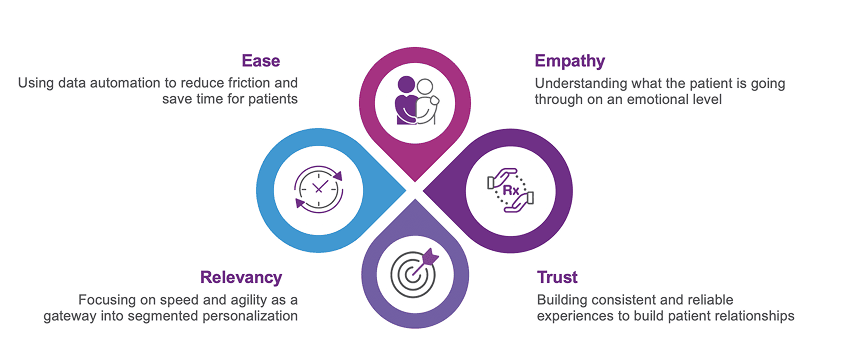
Additionally, AllianceRx built its experiences around a specific set of digital-first design principles — principles that were the opposite of retail-first thinking. This ideology is behind every design decision made by the Alliance Rx Strategy and Experience Team (SET) and what makes their core product, EZ Mobile Reorder, maintain a 99% patient satisfaction rate.

When AllianceRx, A Walgreens Pharmacy was fully absorbed into Walgreens, it triggered a complete rebrand. AllianceRx's brand language was built around a blue and purple palette. The transition to Walgreens' crimson and neutrals wasn't just a color swap. It demanded a top-to-bottom overhaul of every digital product in the Alliance Rx portfolio.

Additionally, AllianceRx built its experiences around a specific set of digital-first design principles — principles that were the opposite of retail-first thinking. This ideology is behind every design decision made by the Alliance Rx Strategy and Experience Team (SET) and what makes their core product, EZ Mobile Reorder, maintain a 99% patient satisfaction rate. Conforming to CARE would mean abandoning all of it.

Core Problem

Retail Logic Doesn't Belong In A Pharmacy

Retail Logic Doesn't Belong In A Pharmacy

Walgreens' CARE Design System is a retail-first system. It optimizes for e-commerce — smaller fonts and tighter margins to fit more content on screen, visual density that serves browsing and product discovery. That logic makes sense for its intended audience.


Specialty Pharmacy patients are a fundamentally different population. They are managing chronic or terminal conditions — diseases like Parkinson's, Multiple Sclerosis, and cancer — that actively affect their ability to interact with a digital interface. Tremors make tapping small buttons difficult. Vision impairment from medication or disease progression makes small type a real barrier. Cognitive load from illness means a cluttered screen isn't just unpleasant — it makes managing your own health harder than it needs to be.


AllianceRx's design system was built to WCAG 2.1 AAA accessibility standards — a higher bar than the AA compliance of CARE. Larger font sizes, larger touch targets, more generous negative space, and less visual noise were not aesthetic preferences. They were deliberate decisions driven by Alliance Rx's guiding principles. Adopting CARE as-is was simply not an option.

Key Differences

CARE Design System (Retail)

  • Optimized for e-commerce conversion

  • High visual density, promotional hierarchy

  • WCAG 2.1 AA accessibility

  • Smaller type and margins to fit more content

  • Designed for healthy, incidental users browsing

WSP Design System (Clinical)

  • Optimized for task completion and safety

  • Generous negative space, minimal visual noise

  • WCAG 2.1 AAA accessibility

  • Larger type and touch targets for impaired motor/vision

  • Designed for patients managing serious conditions

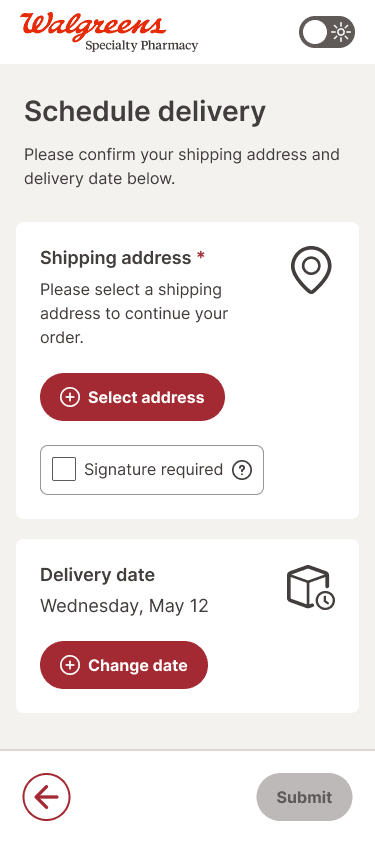
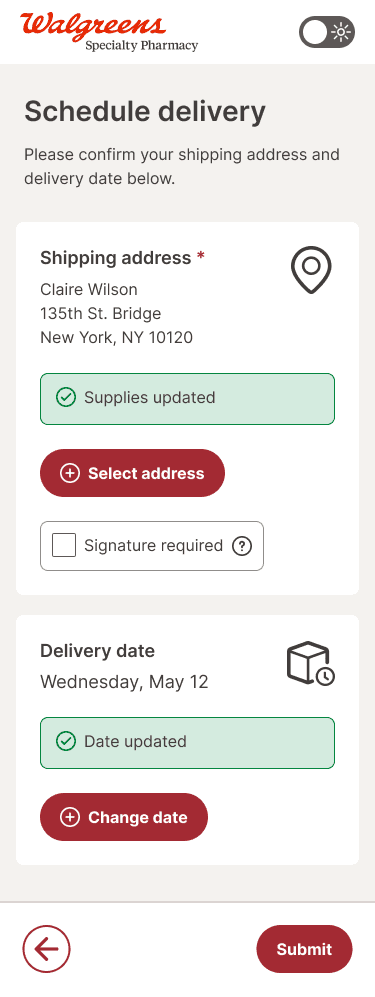
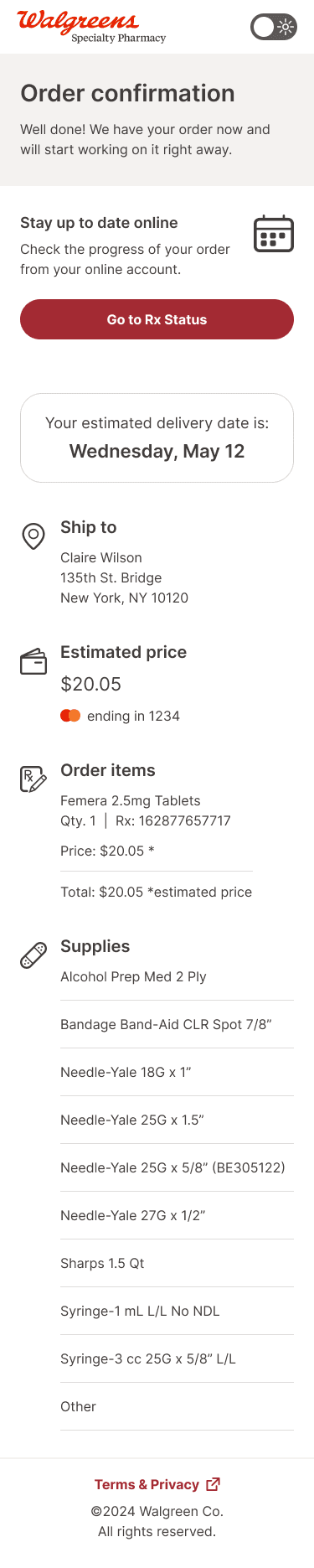
New Walgreens Specialty Pharmacy Design System
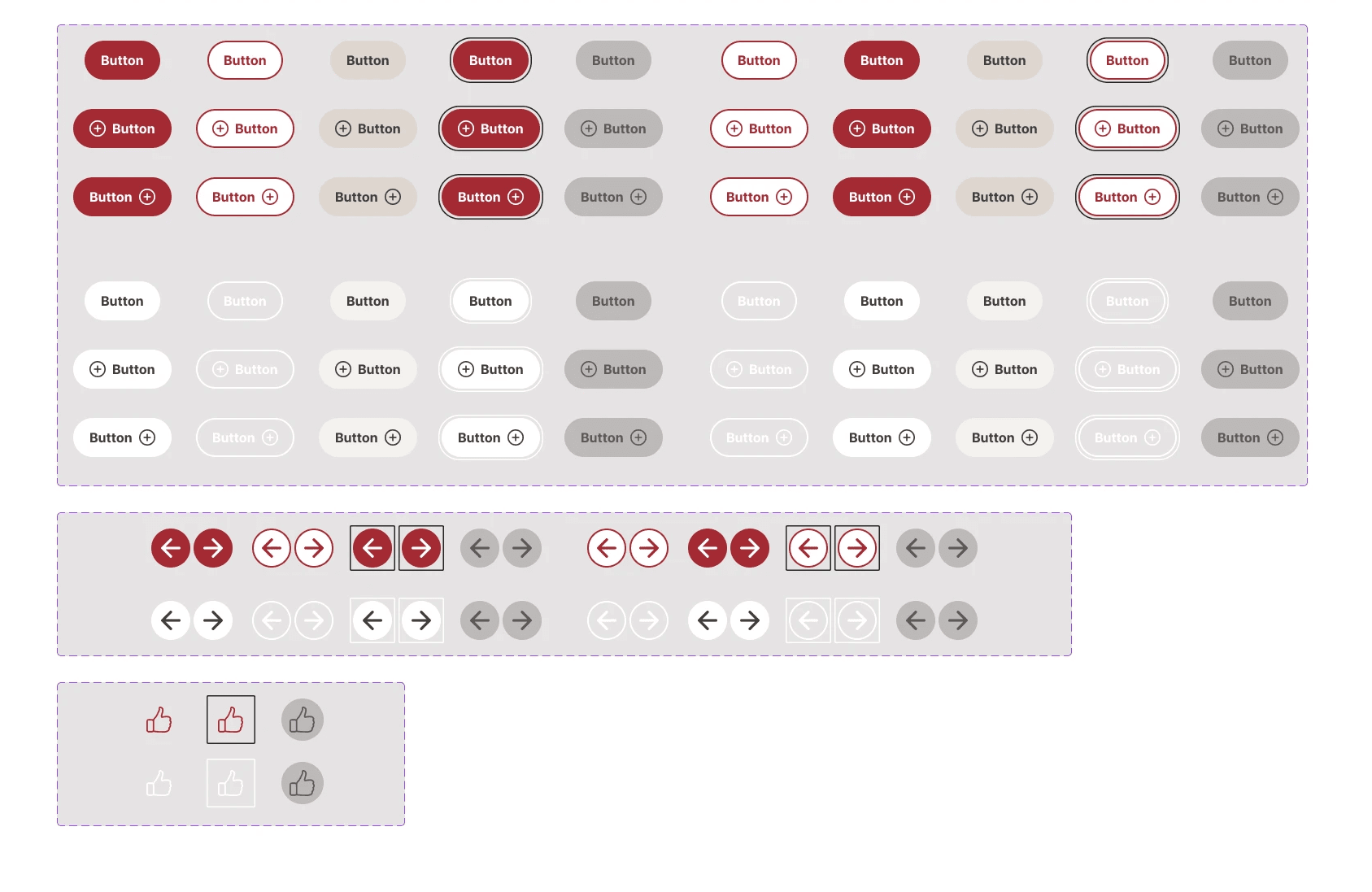
Walgreens' CARE Retail Design System
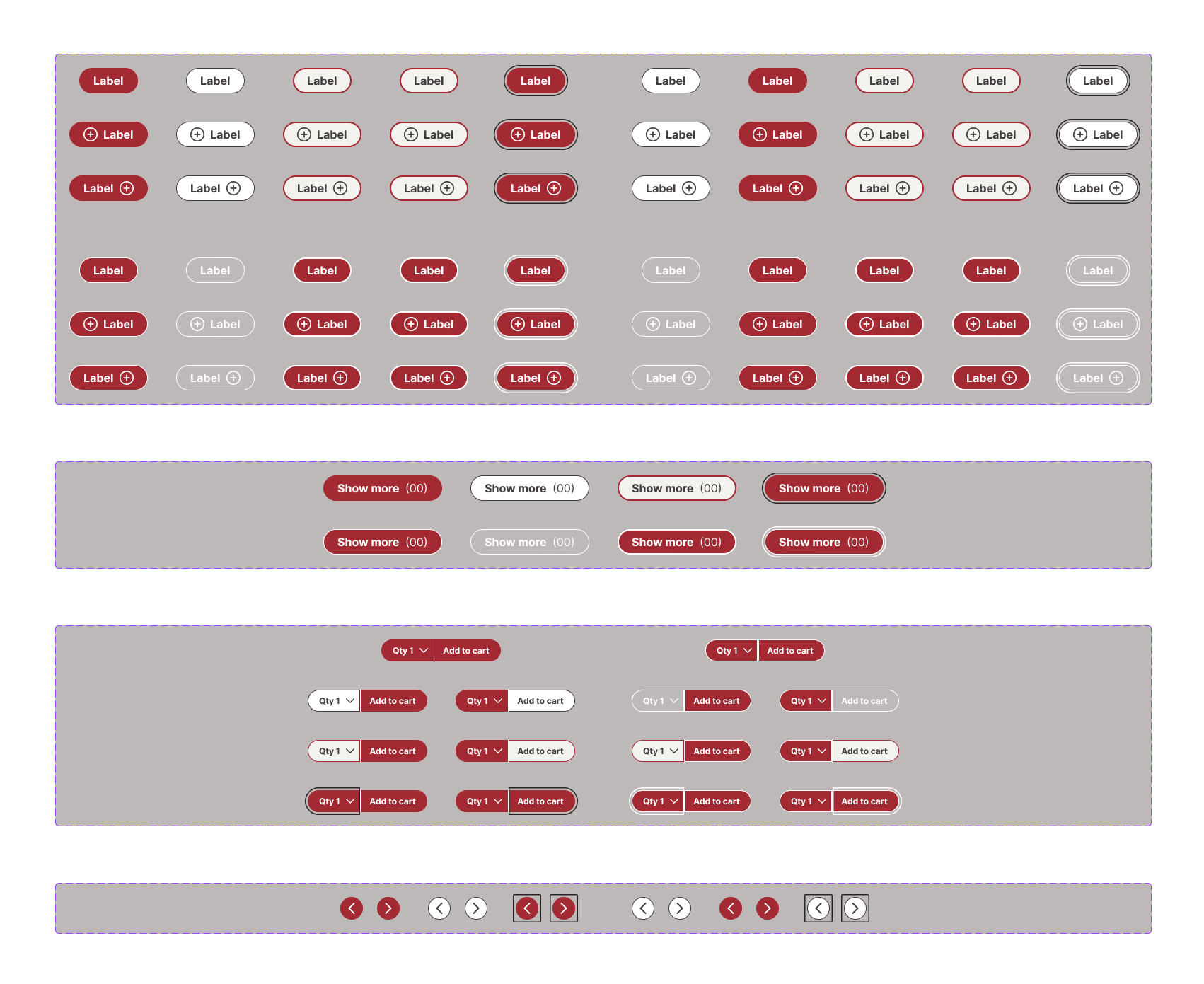
New Walgreens Specialty Pharmacy Design System
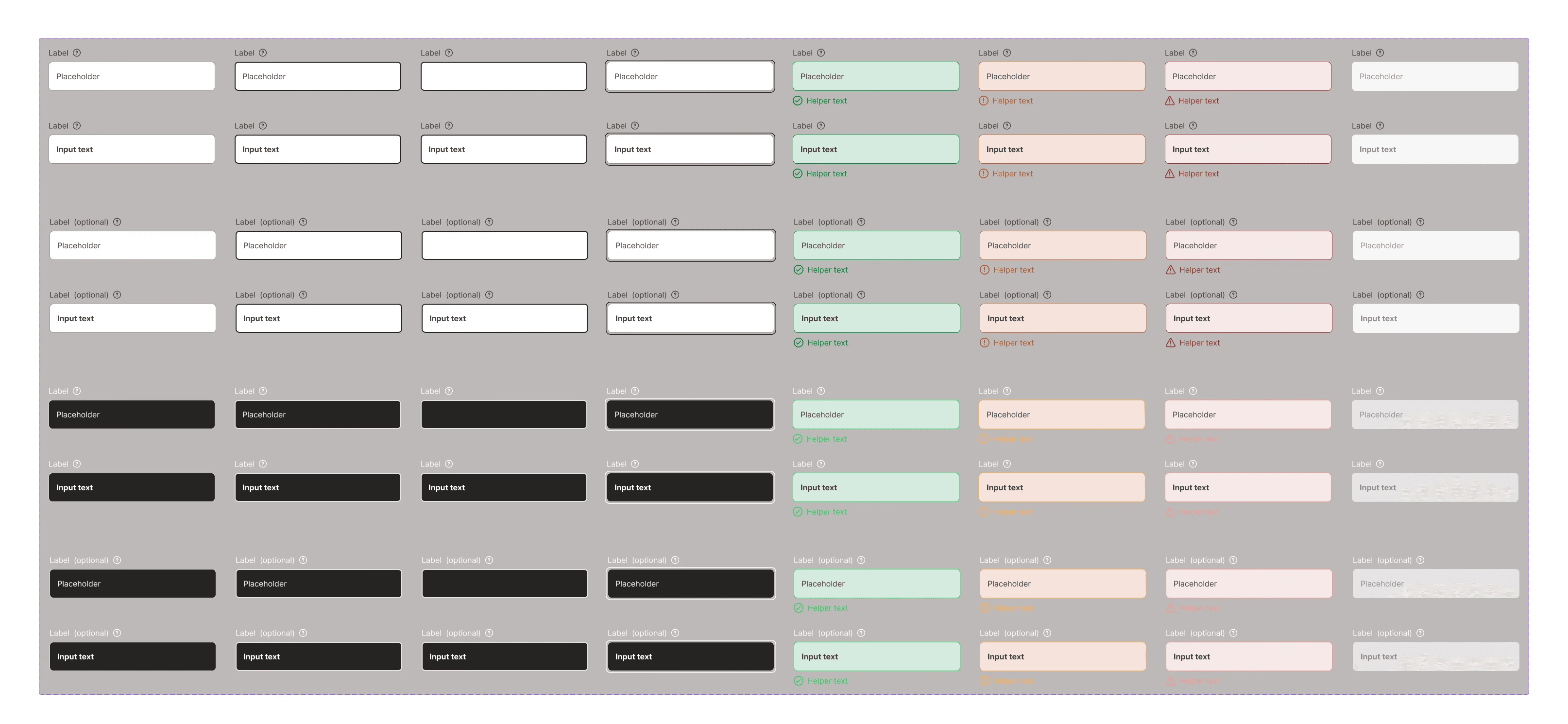
Walgreens' CARE Retail Design System
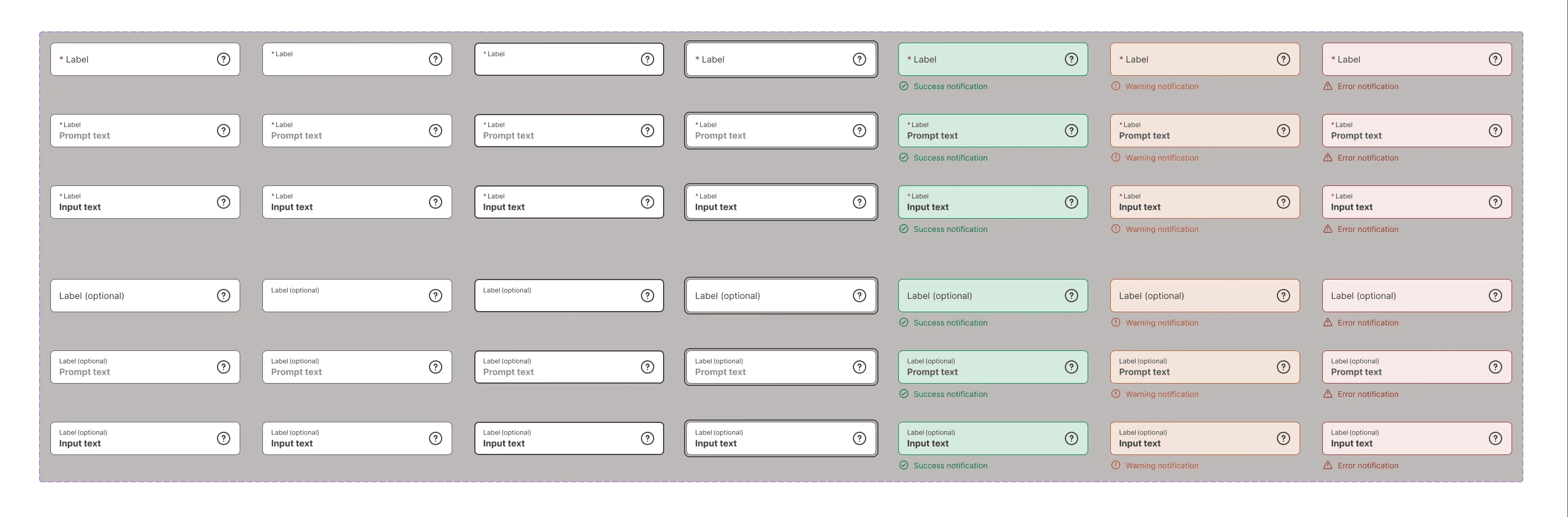
Product Strategy

Constrained by Time, Not by Standards

Constrained by Time, Not by Standards

We didn't have the luxury of a full design system rebuild before the rebrand needed to go live. The business required shipping products with the new brand identity on a fixed timeline. So we made a deliberate call: do a rapid reskin of all existing products to meet the rebrand deadline, and build the true WSP Design System in parallel — using the reskin process itself to surface exactly where the CARE components failed our patients.


That constraint turned out to be useful. The reskin was an accelerated audit. Every moment a CARE component didn't translate — a button too small, a label too light, a state pattern too ambiguous — became a documented design decision for the new system.

We didn't have the luxury of a full design system rebuild before the rebrand needed to go live. The business required shipping products with the new brand identity on a fixed timeline. So we made a deliberate call: do a rapid reskin of all existing products to meet the rebrand deadline, and build the true WSP Design System in parallel — using the reskin process itself to surface exactly where the CARE components failed our patients.


That constraint turned out to be useful. The reskin was an accelerated audit. Every moment a CARE component didn't translate — a button too small, a label too light, a state pattern too ambiguous — became a documented design decision for the new system.

Phase 1 • Reskin

Rapid rebrand across all active products

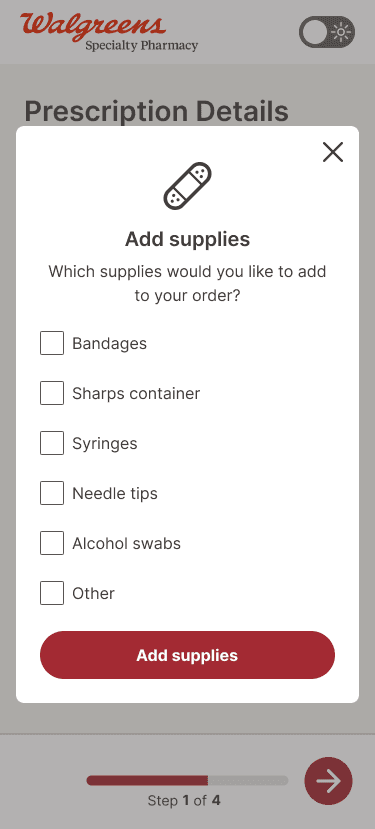
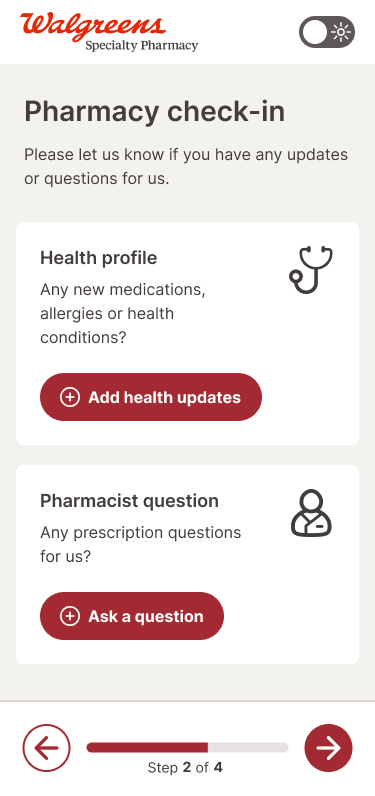
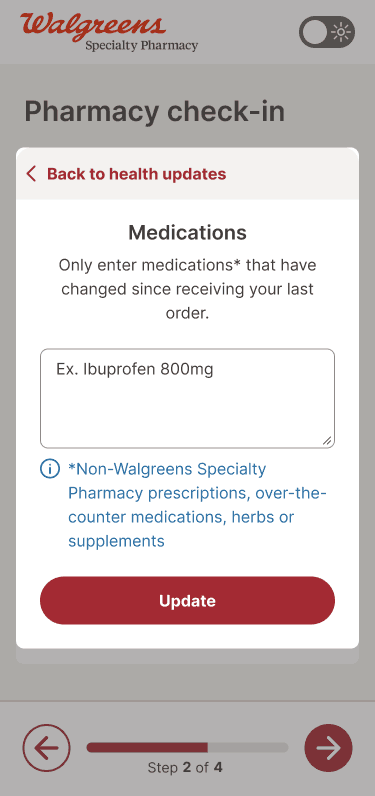
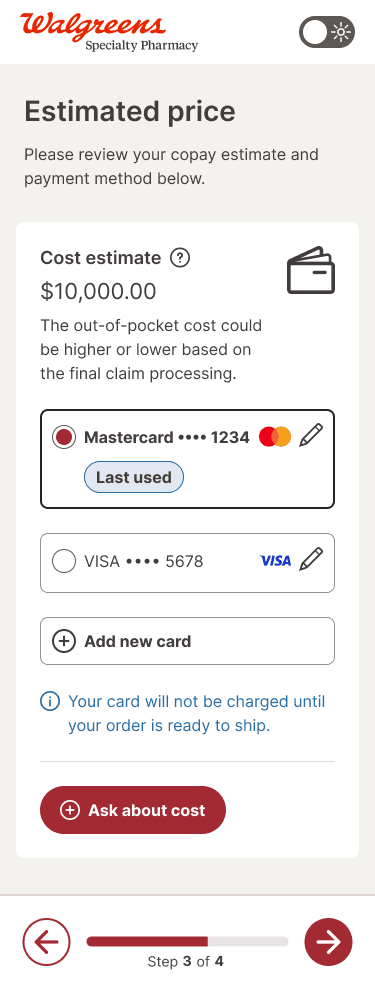
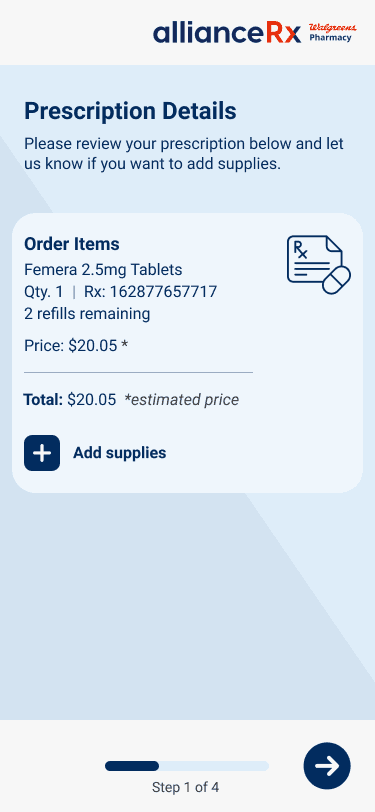
Applied Walgreens crimson and neutrals across EZ Mobile Reorder, New Patient Onboarding (NPO), and Walgreens Mail Service. Preserved AllianceRx's clinical component logic while meeting brand transition deadlines.

Phase 1 • Rebuild in Parallel

WSP Design System built alongside the reskin

As reskin decisions revealed CARE's clinical gaps, each gap became a design system specification. Components were rebuilt from the CARE foundation with AAA compliance, increased spacing, and clinical interaction patterns.

Phase 2 • Launch

New WSP website designed and launched

Designed and launched a new walgreensspecialtypharmacy.com — the first fully WSP DS-native product. The system's clinical principles were applied holistically, not retrofitted onto an existing experience.

Phase 3 • Iterate

Website deliberately overhauled one year later

With a full year of patient interaction data and a more mature design system, the website was redesigned — not patched. This was an intentional reset to close the gap between the rapid-launch version and the system's full clinical vision.

Ongoing

System expanded to new products

The WSP Design System became the foundation for all new Specialty Pharmacy digital products built after the initial launch.

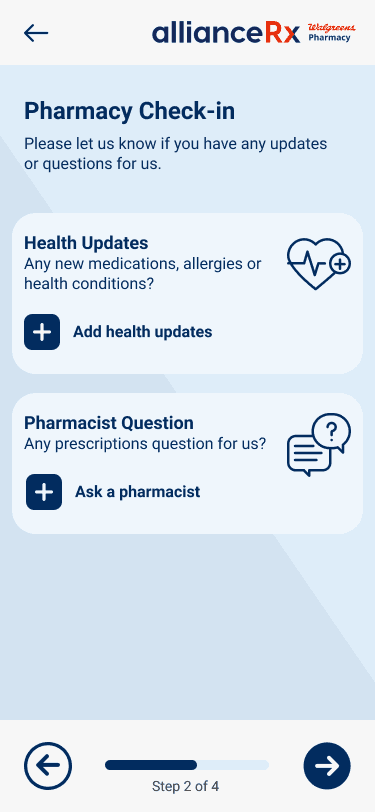
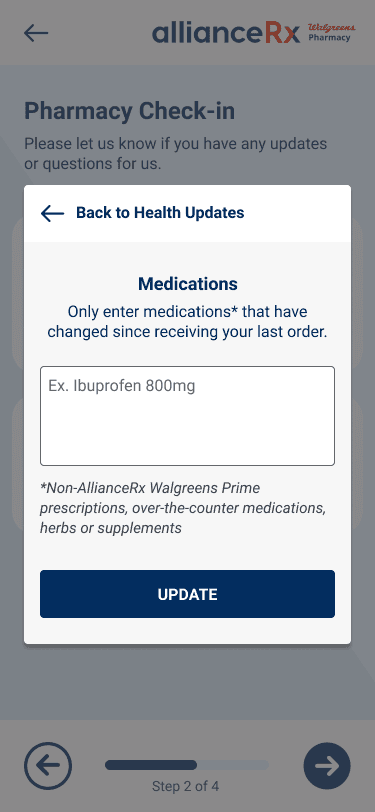
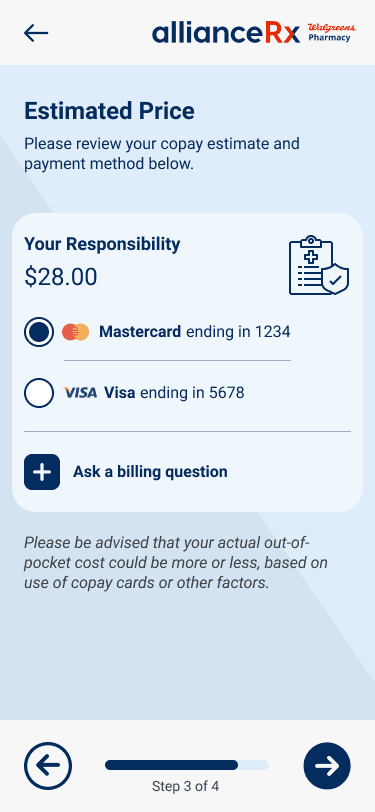
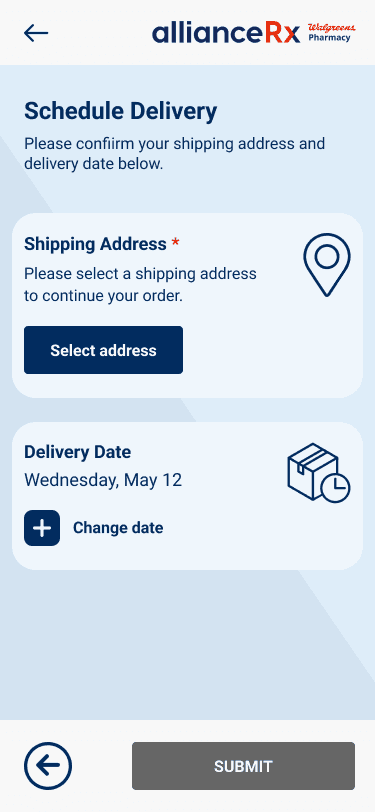
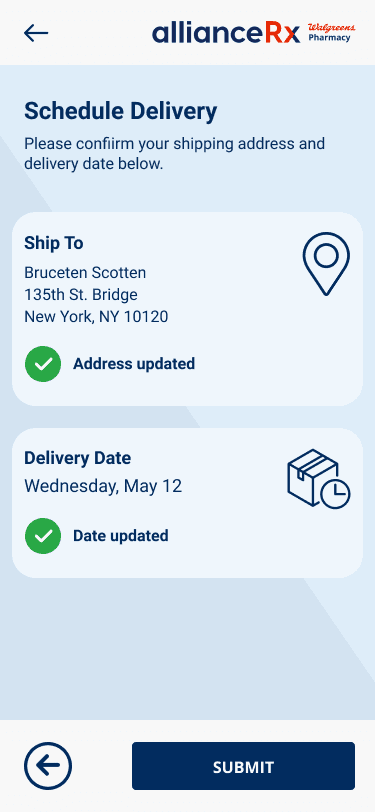
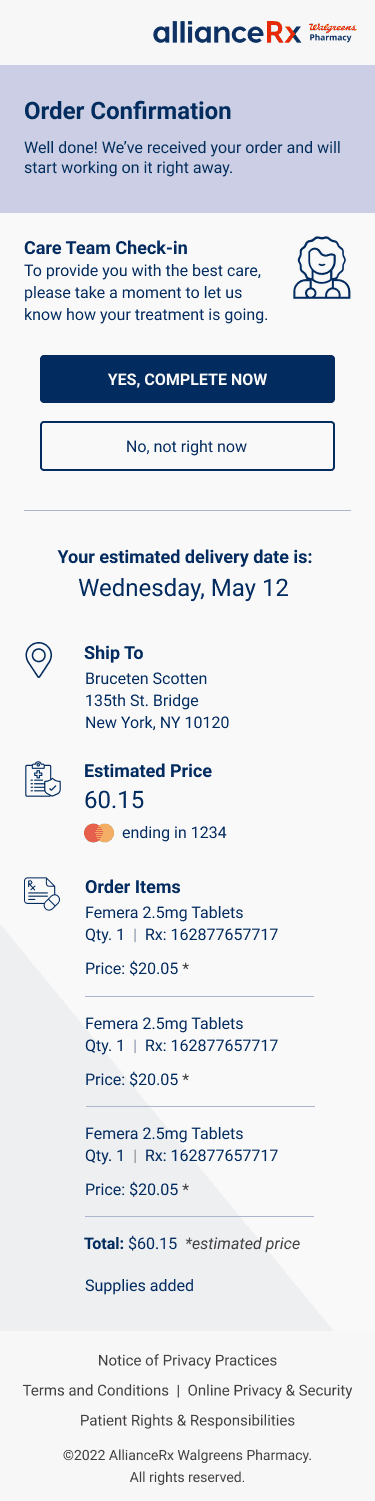
EZ Mobile Reorder • New WSP Brand
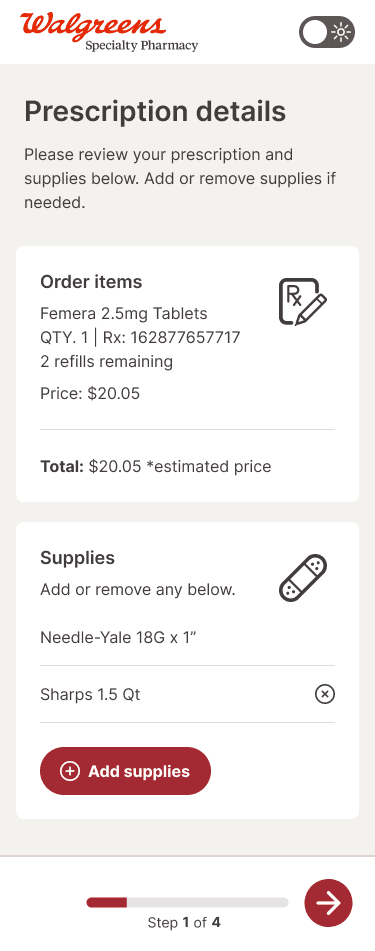
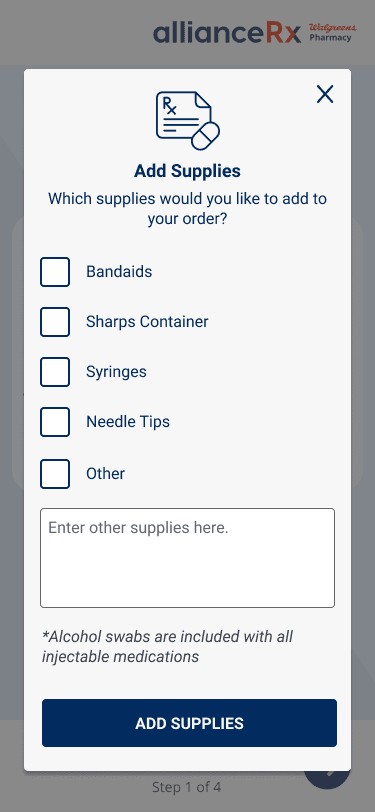
EZ Mobile Reorder • Alliance Rx
Outcome & Summary

Pharmacy Requires A Different Standard

Pharmacy Requires A Different Standard

The WSP Design System is now the design foundation across the full Specialty Pharmacy digital portfolio. Each new product inherits its clinical accessibility standards, spatial logic, and component library — without needing to re-litigate those decisions from scratch.


Products currently built on the WSP Design System:

  • EZ Mobile Reorder (Shipped)

  • Walgreens Mail Service (Shipped)

  • New Patient Onboarding (NPO) (Shipped)

  • NPO Rearchitecture (Development, est. Q1 FY 2027)

  • Jump Pad Payment Management Enhancement (Shipped)

  • Community-based Specialty Pharmacy (CBSP) (Development, est. FY 2026)


The system also changed how design decisions get made and defended. Having a documented, principled component library means every layout choice has a rationale behind it — not just a visual preference. For a product area serving patients with serious conditions, that accountability matters.

We validated the solution through staged releases:

  • 30/70 rollout: +5% completion rate, +2% first-time buyers

  • 50/50 rollout: +6% completion rate, +5% first-time buyers (including emerging markets)

  • Full release: +14% registration completion, +5% first-time buyers overall


The biggest impact came from reducing friction in identity verification, specifically improving mobile document upload and enabling a seamless desktop-to-mobile continuation flow.

Challenges and Tradeoffs

The Crimson Red Flag

The Crimson Red Flag

Building a clinical design system inside a retail organization comes with constraints that have no clean design solution. The Walgreens branding and system palette was designed by an agency without deep UX expertise in healthcare or accessibility. The most significant issue: Walgreens CARE uses primary crimson — the brand's signature color — as both its primary interactive state and its error state. As part of the Walgreens umbrella, I didn't have the authority to redesign the global color system, not even just the feedback colors. So instead of fighting a battle I couldn't win, I designed around it, but it's an ongoing challenge.


A Major [Crimson] Red Flag:
In a clinical context, conflating "selected" with "error" is a real usability problem. A patient confirming a medication refill shouldn't have a moment of doubt about whether a red button means "submit" or "something is wrong." This required careful execution at the component level to ensure selected states, primary actions, and error states were visually distinct — through shape, label, and layout — even when using the same base color.

We validated the solution through staged releases:

  • 30/70 rollout: +5% completion rate, +2% first-time buyers

  • 50/50 rollout: +6% completion rate, +5% first-time buyers (including emerging markets)

  • Full release: +14% registration completion, +5% first-time buyers overall


The biggest impact came from reducing friction in identity verification, specifically improving mobile document upload and enabling a seamless desktop-to-mobile continuation flow.

What's Next

The "One Pharmacy" Vision

The "One Pharmacy" Vision

With the recent restructuring and merging of all pharmacy digital operations at Walgreens under the Specialty Pharmacy design leader, there's a new opportunity to expand this work. Every pharmacy experience, especially the Retail Pharmacy digital experience, would benefit from using WSP design principles. Not to mention that the continuity of the components across all pharmacy products will reduce friction that Retail Pharmacy patients are already complaining about.


Pharmacy is already a high-complexity, high-stakes space. Cramming in line items, using bold and color without direction, and optimizing for information density makes an already difficult product require more cognitive work at exactly the moment when a patient has the least capacity for it.


My goal is to use the WSP Design System as a foundation and proof of concept for aligning pharmacy design principles across all lines of business — making the case that pharmacy, like specialty pharmacy, should be treated differently from e-commerce.

We validated the solution through staged releases:

  • 30/70 rollout: +5% completion rate, +2% first-time buyers

  • 50/50 rollout: +6% completion rate, +5% first-time buyers (including emerging markets)

  • Full release: +14% registration completion, +5% first-time buyers overall


The biggest impact came from reducing friction in identity verification, specifically improving mobile document upload and enabling a seamless desktop-to-mobile continuation flow.