Credit Policy Run Logs
Turning Automated Decisions into Clear, Actionable Answers
Noble’s Policy Builder enables businesses to generate automated credit decisions, but users lacked visibility into why those decisions occurred.
Company
Noble (Fintech)
Role
UX UI design, UX flows & user scenarios, prototyping, design system contributions
Team
CEO, CPO, engineer
Deliverables
Registration flow for web and mobile
Overview
Simplifying how companies make financial decisions
Noble simplifies how companies make financial decisions. It automates onboarding, underwriting, and monitoring in one unified platform.
At Noble, policy outcomes were technically correct, but operationally opaque. Underwriters could see decisions, but not understand or act on them. This created a hidden dependency on engineering and slowed critical business workflows.
This redesign turned a static, view-only experience into an interactive, diagnostic tool that gives underwriters clear insight into what happened, what went wrong, and what to do next.
Key Impact
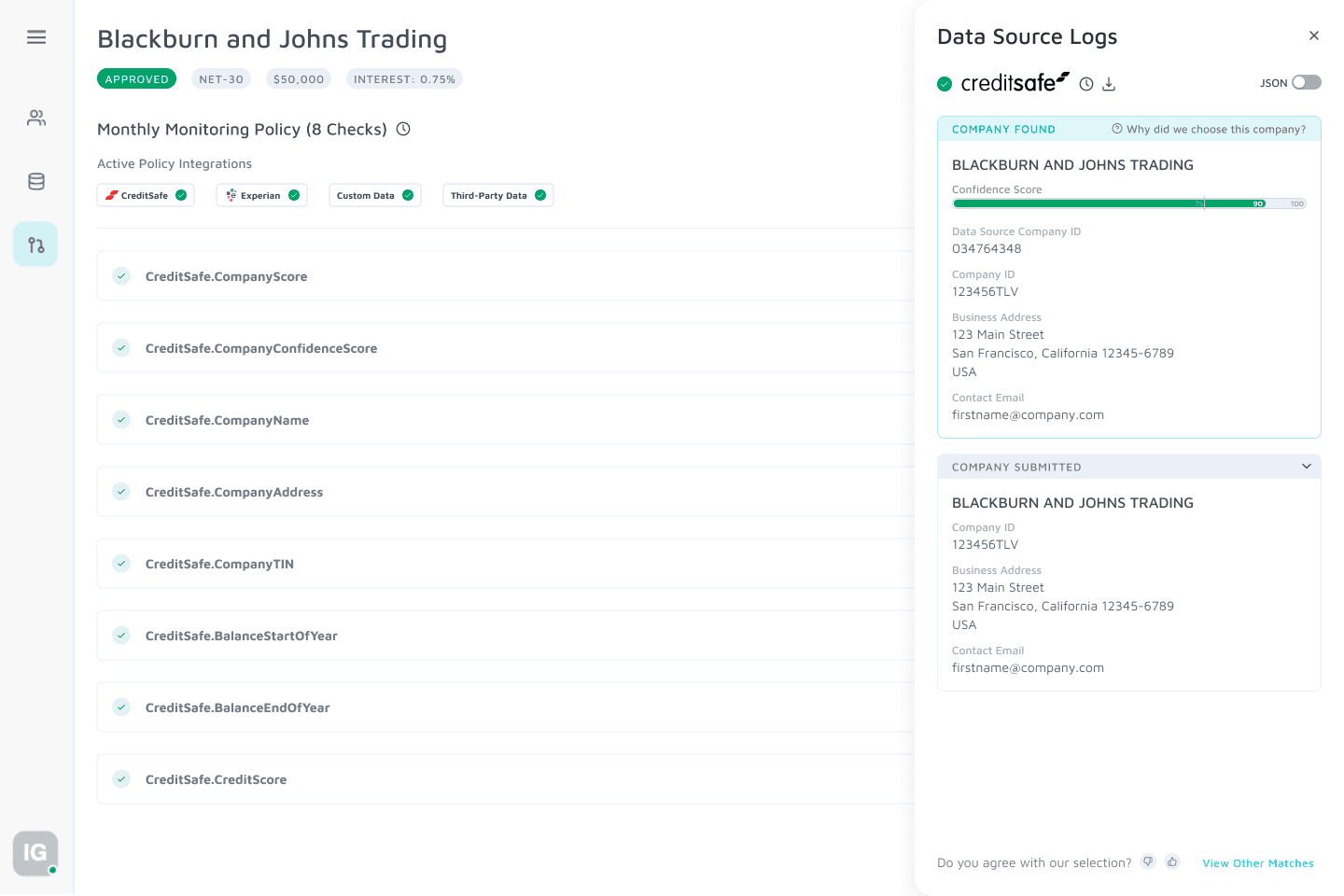
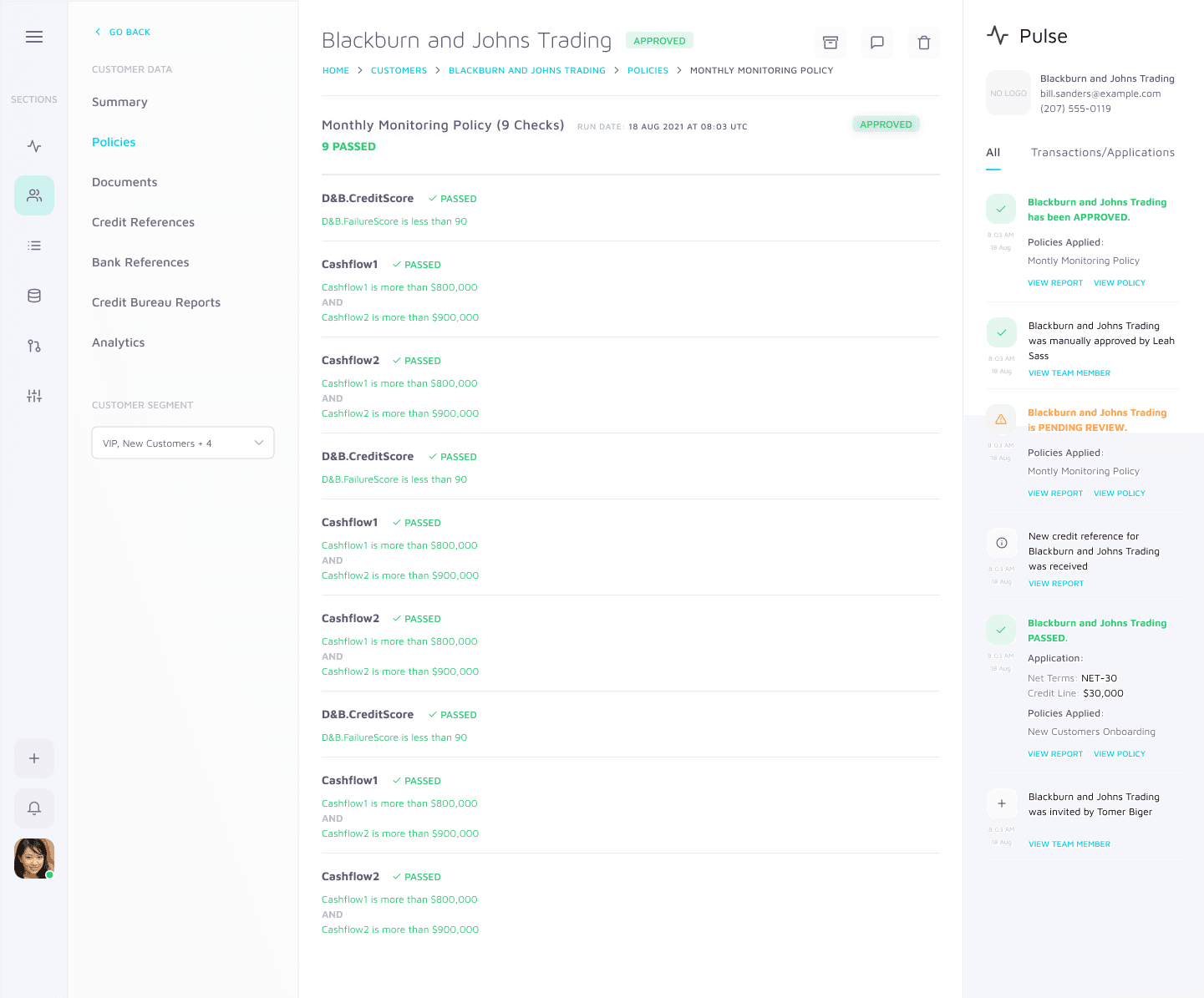
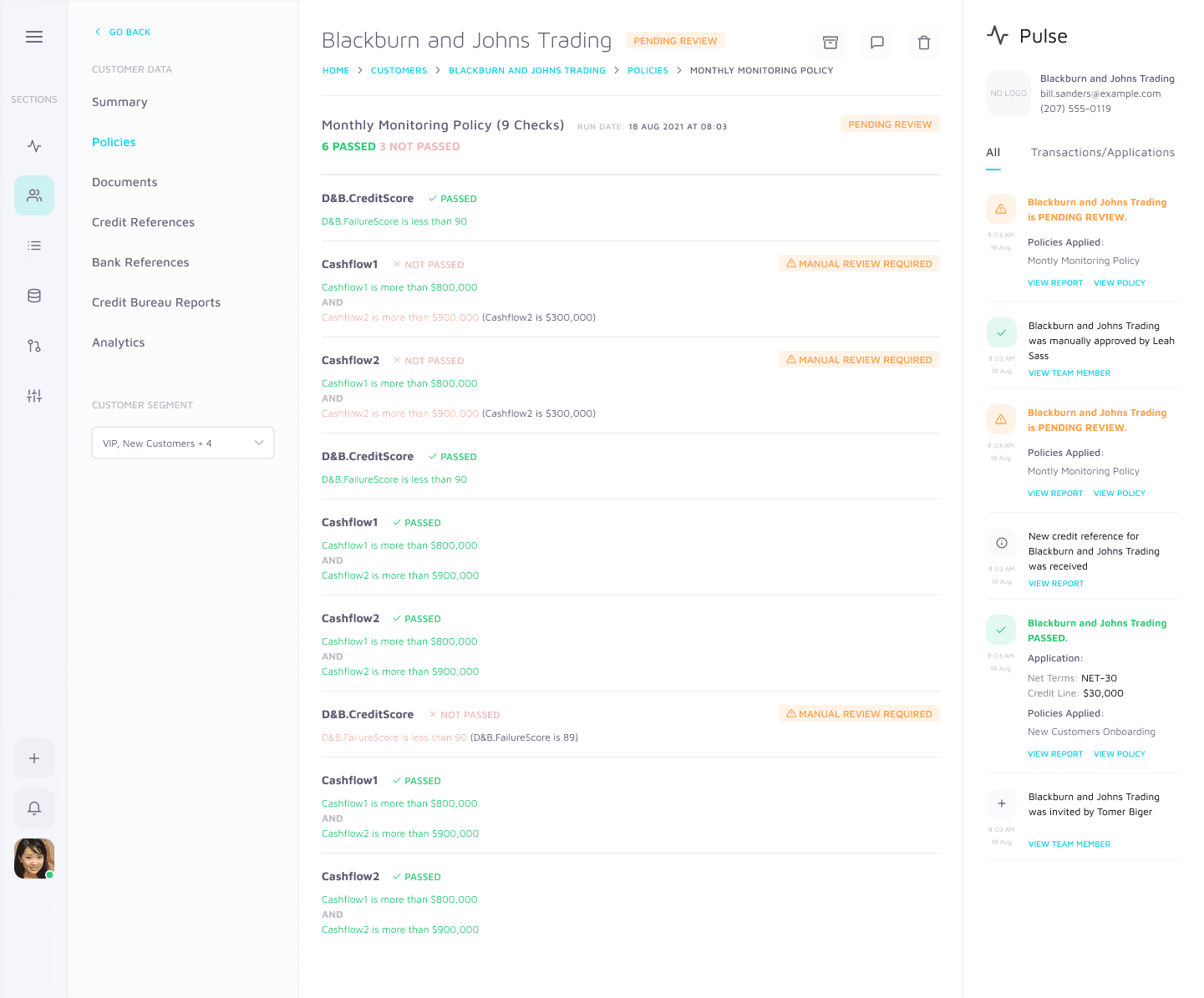
I designed a dynamic results interface that exposes both decision outcomes and the logic behind them.
Added visibility into conditional pass/fail credit checks and onboarding statuses (Approved, Pending Review, Rejected, Error), so decisions stopped being a black box.
Underwriters could now troubleshoot themselves by seeing the root cause of a failure directly, instead of waiting on engineering to interpret it.
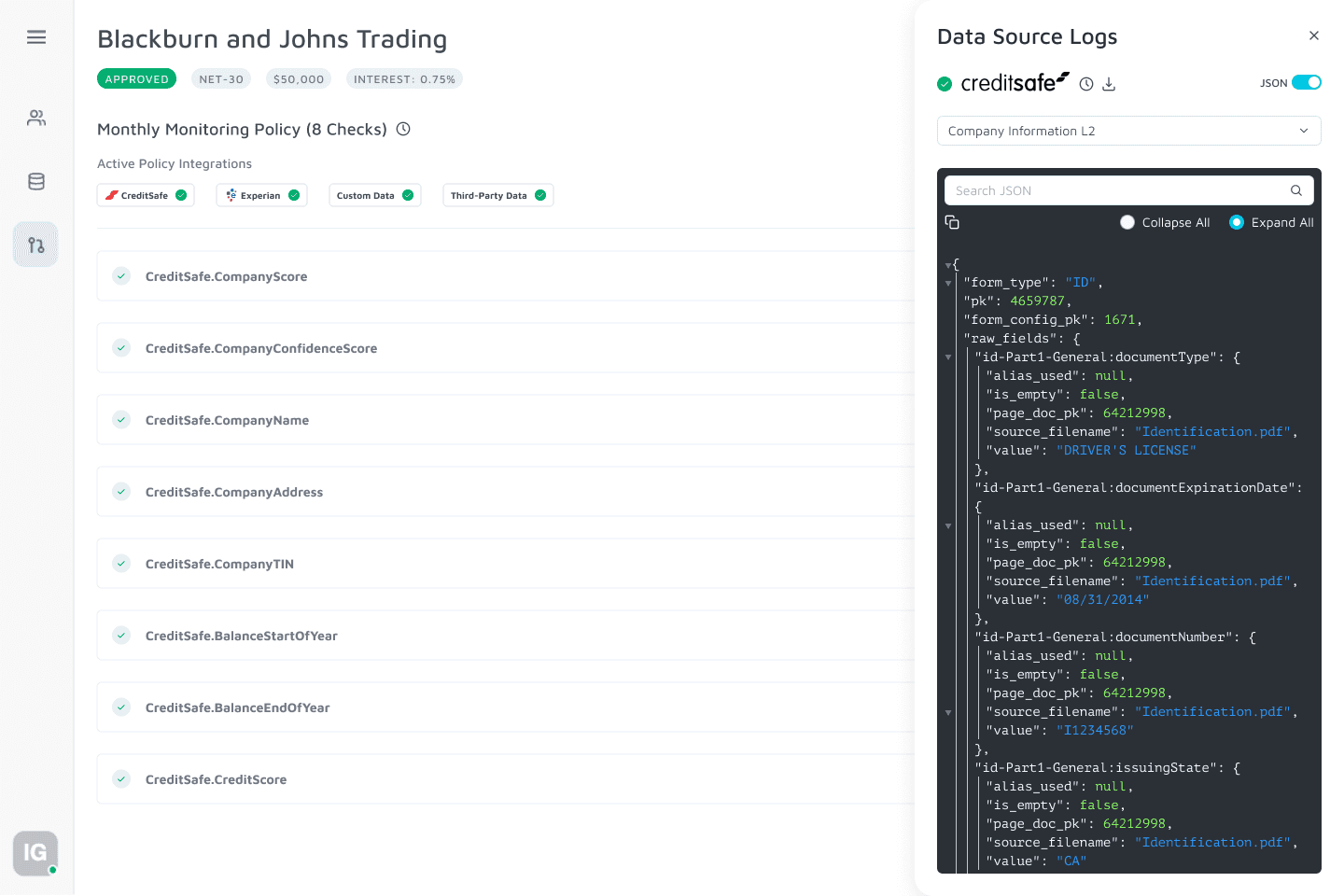
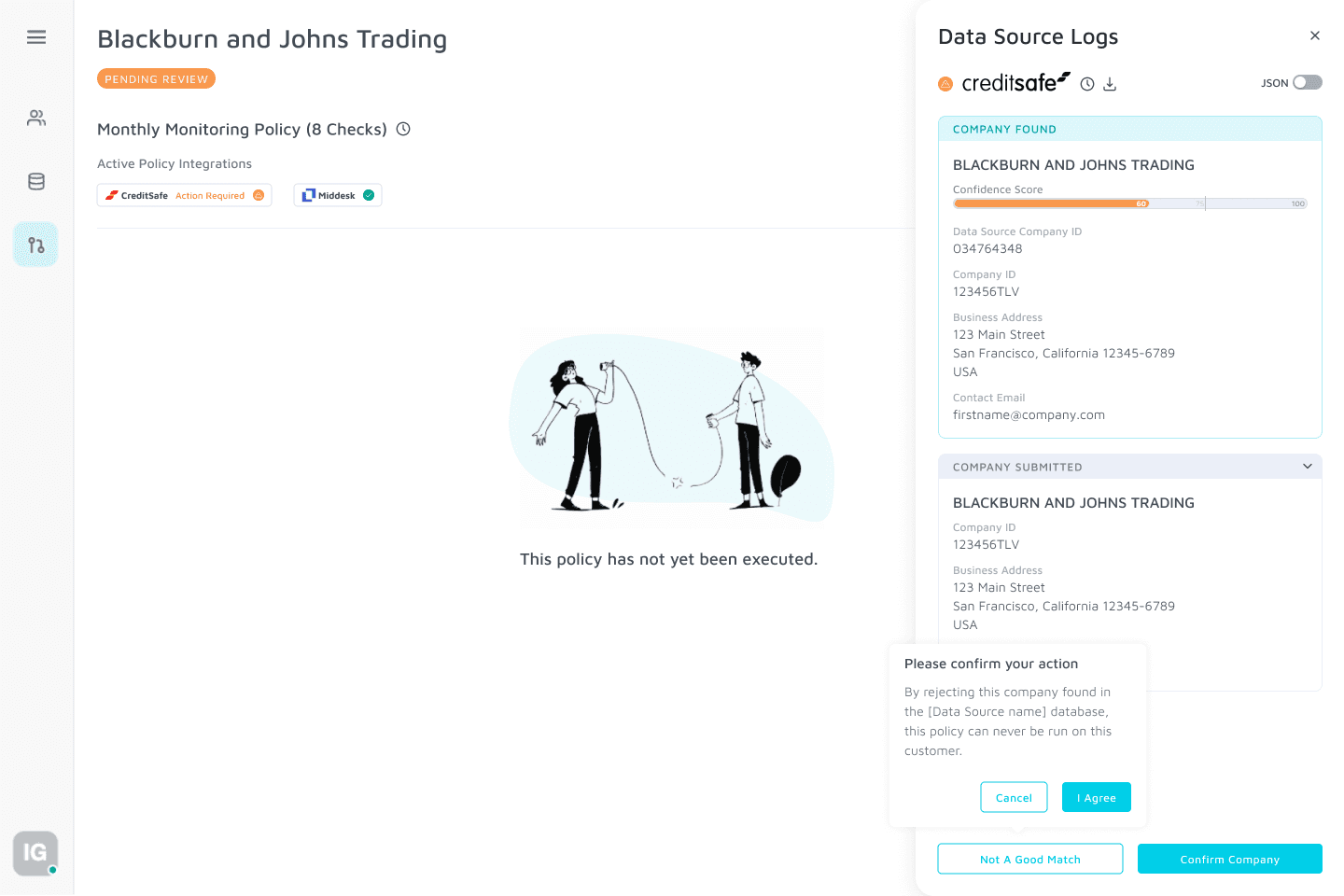
Complex data lives in one interface for auditing, with access to the underlying logic (JSON) for advanced users who need it.
Key Design Move
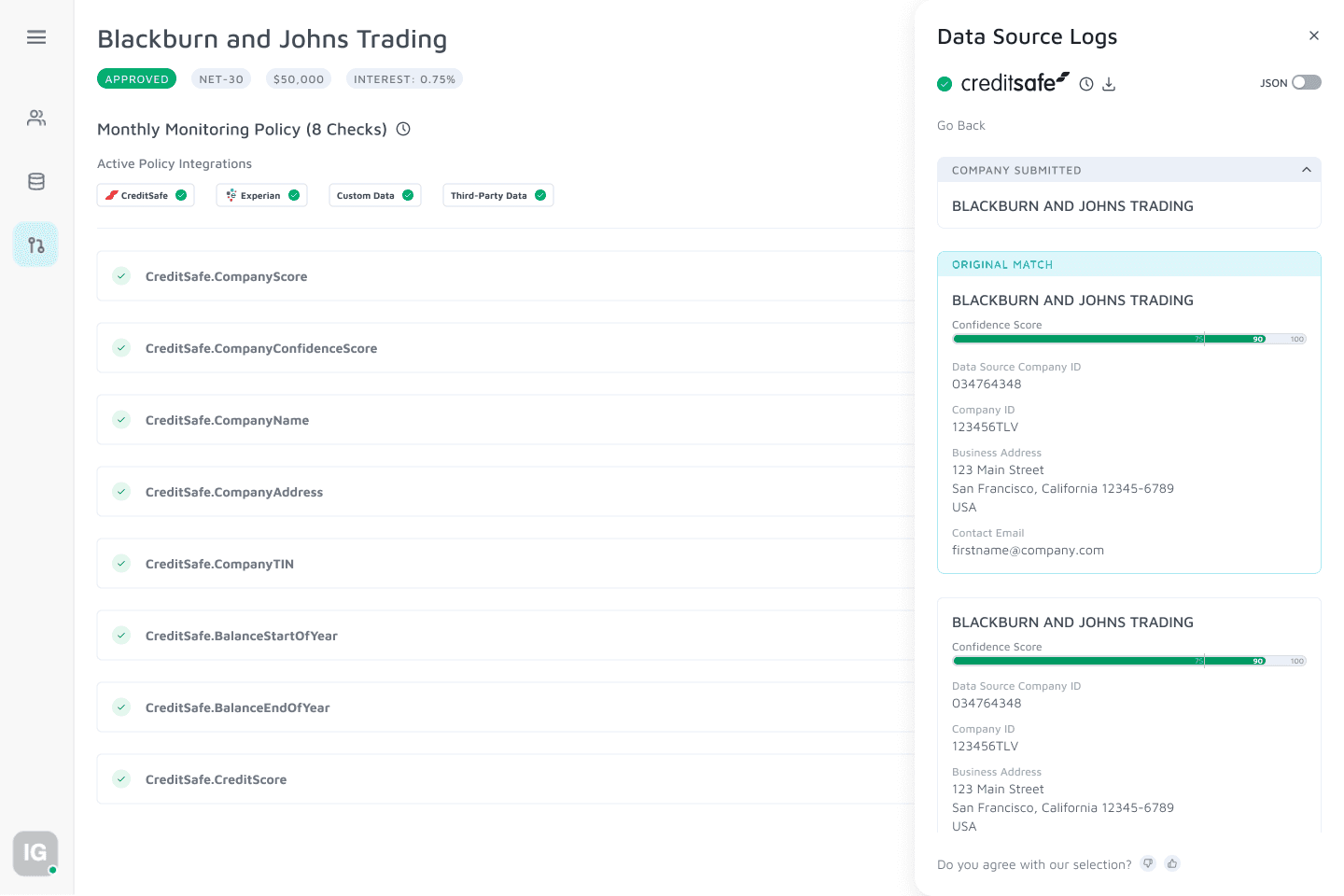
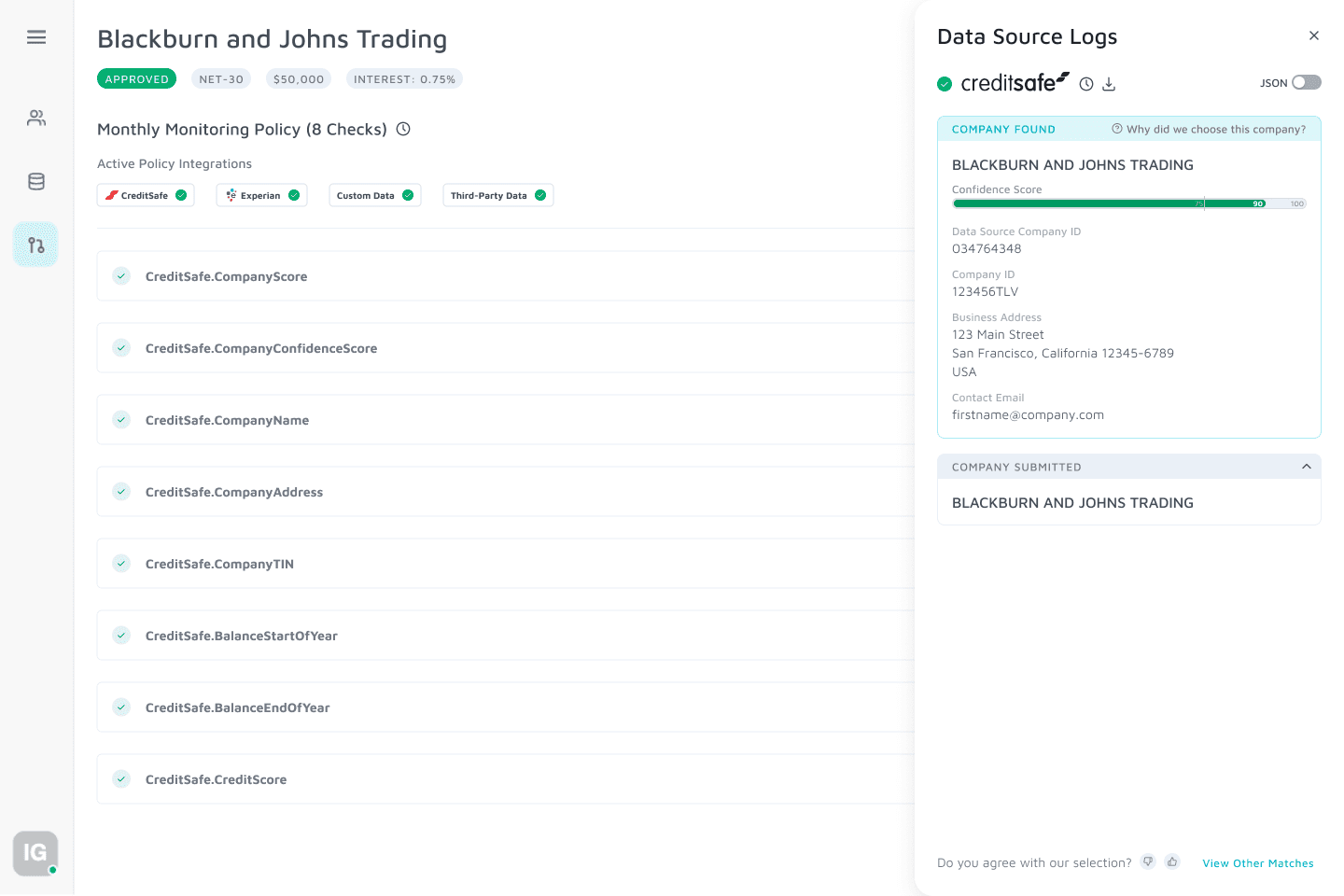
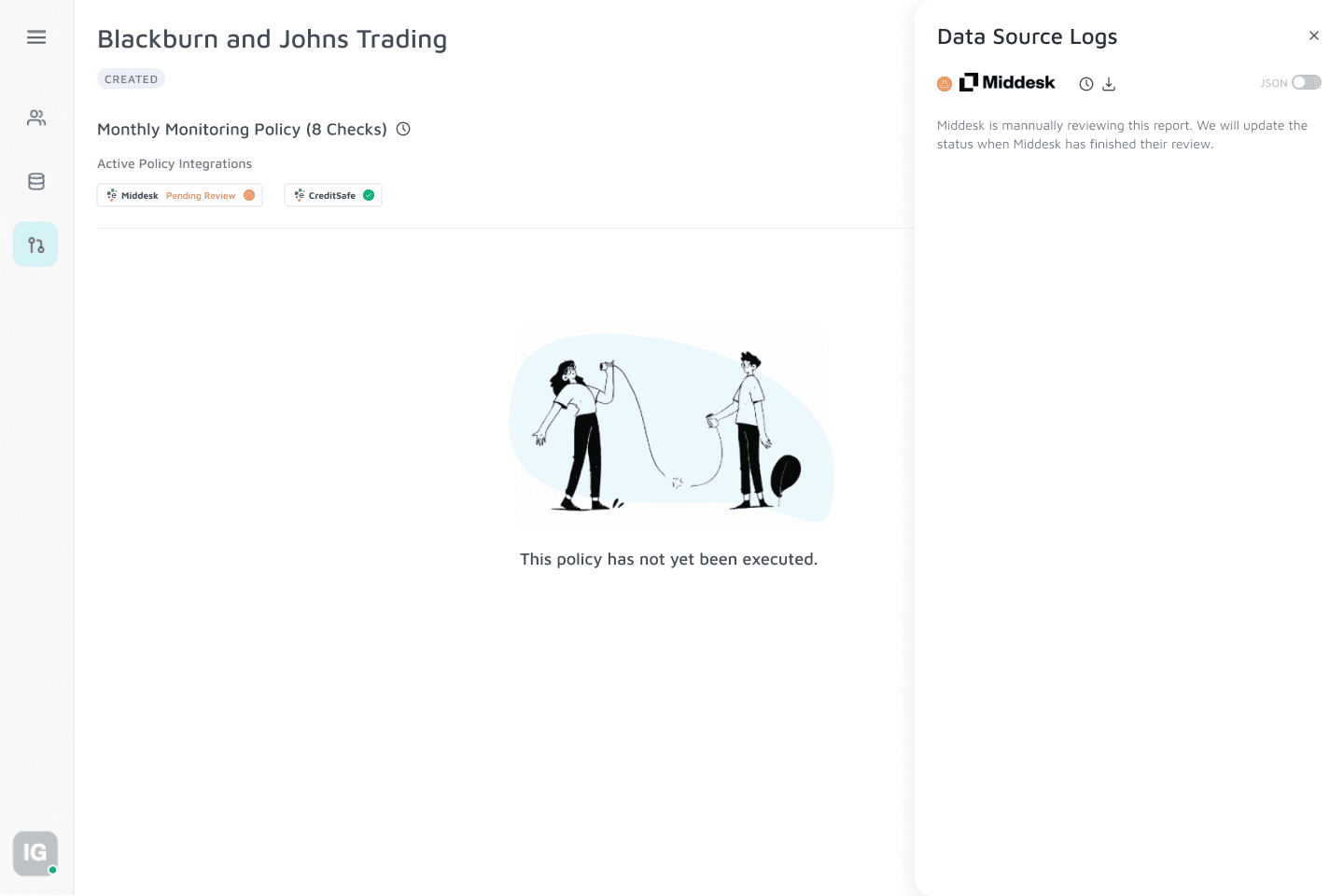
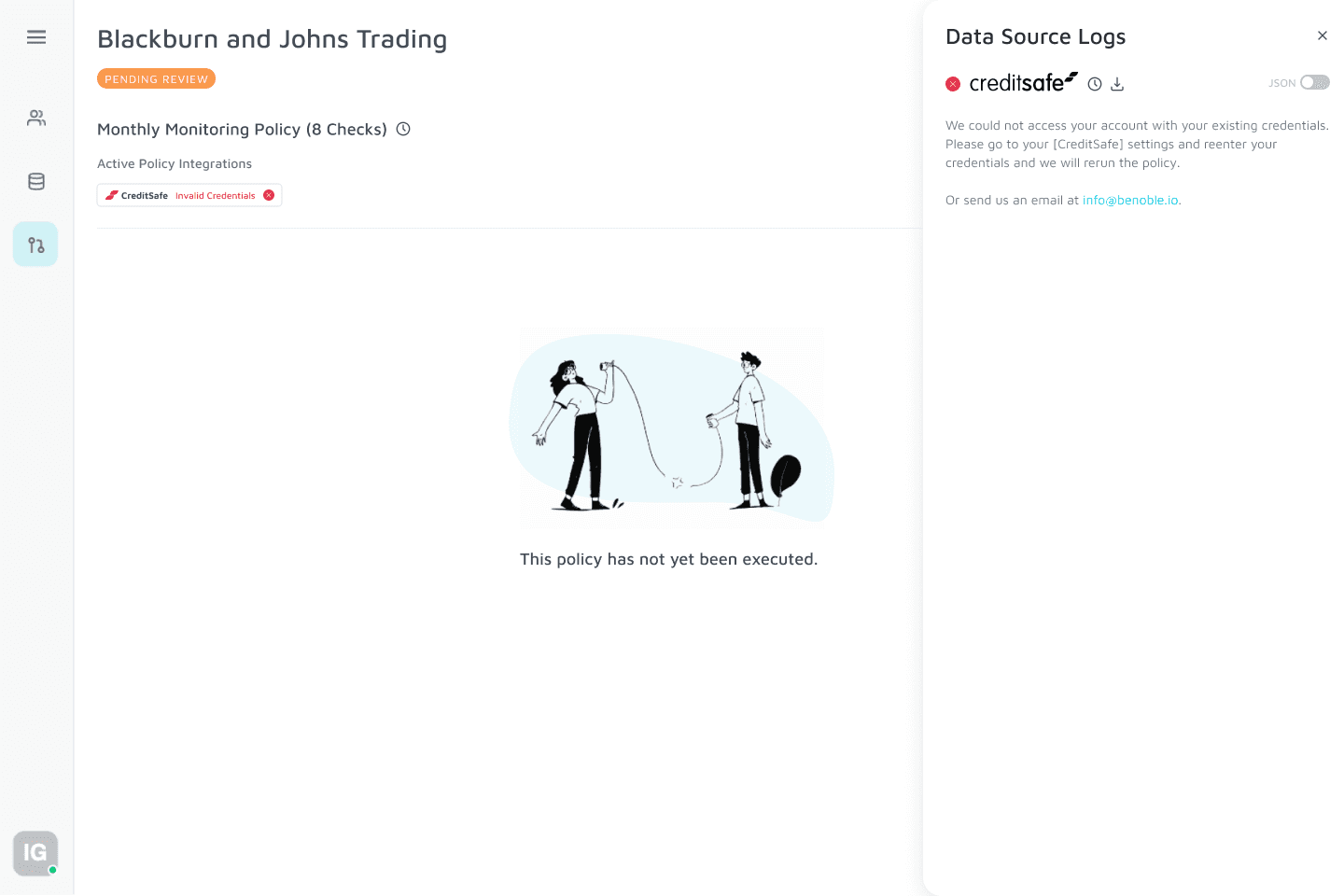
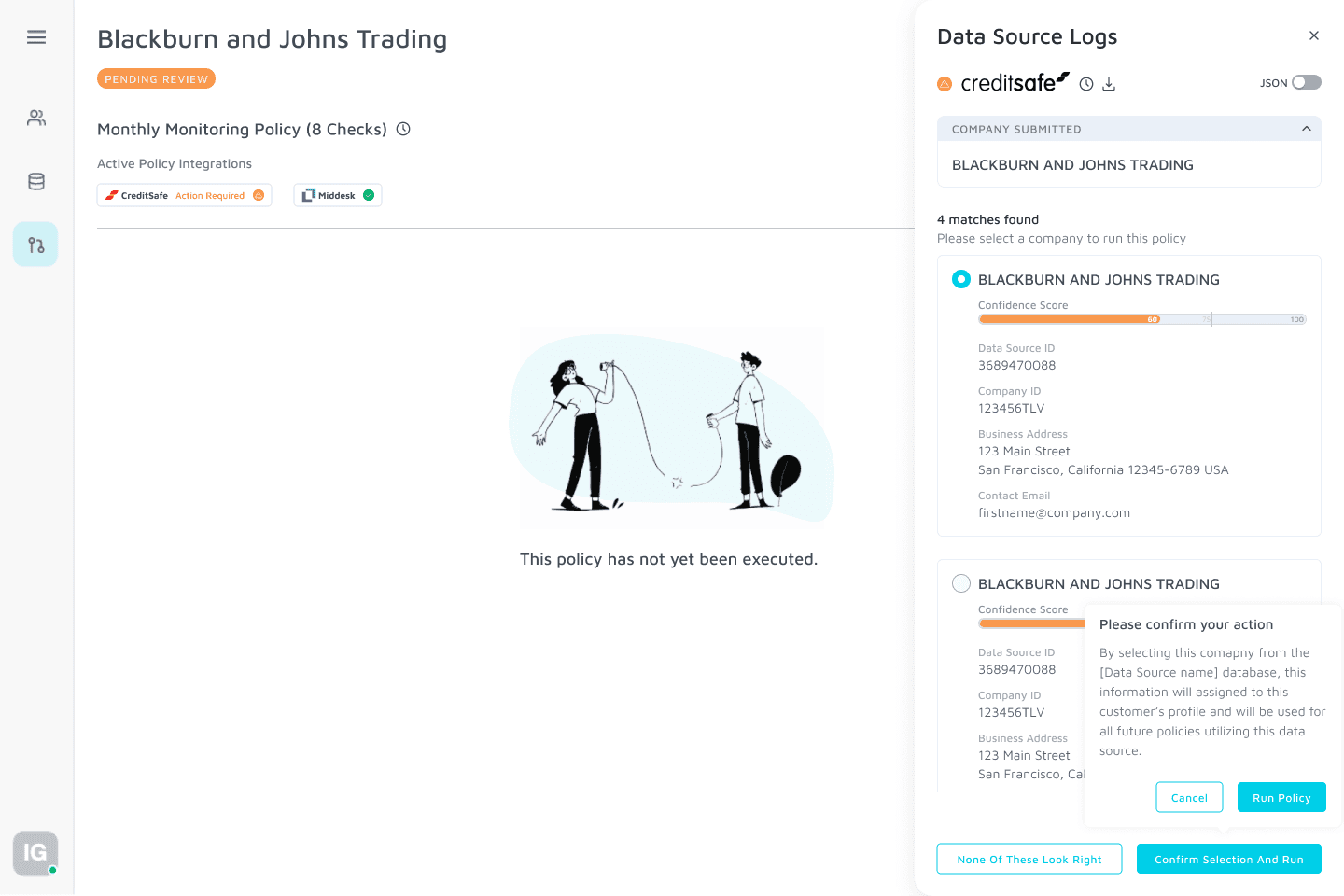
A side panel overlay lets users dig into detailed data without losing context. The main results view stays intact while they inspect further.
Core Problem
Bringing Clarity to System Decisions
The original experience surfaced results, but not reasoning. Users couldn't:
Understand why a policy failed or stalled
Investigate "Pending Review" decisions
Diagnose errors or rerun policies independently
This forced underwriters to interpret results themselves when making high-stakes credit decisions, which raised the potential for error.
Product Strategy
Turning Confusing Results into Clear Answers
Instead of just "adding more visibility," I wanted to help people understand what happened, why it happened, and what to do next.
Clarity over oversimplification
Underwriting is complex, and hiding details doesn't help. The goal was to make it easier to understand, not to water it down.
Start simple, then go deeper
Give people a clear answer upfront, with the ability to dig into the details without losing their place.
Make it useful, not just informative
It wasn't enough to show the decision for each step. Users needed to be able to act on it and make changes if necessary.
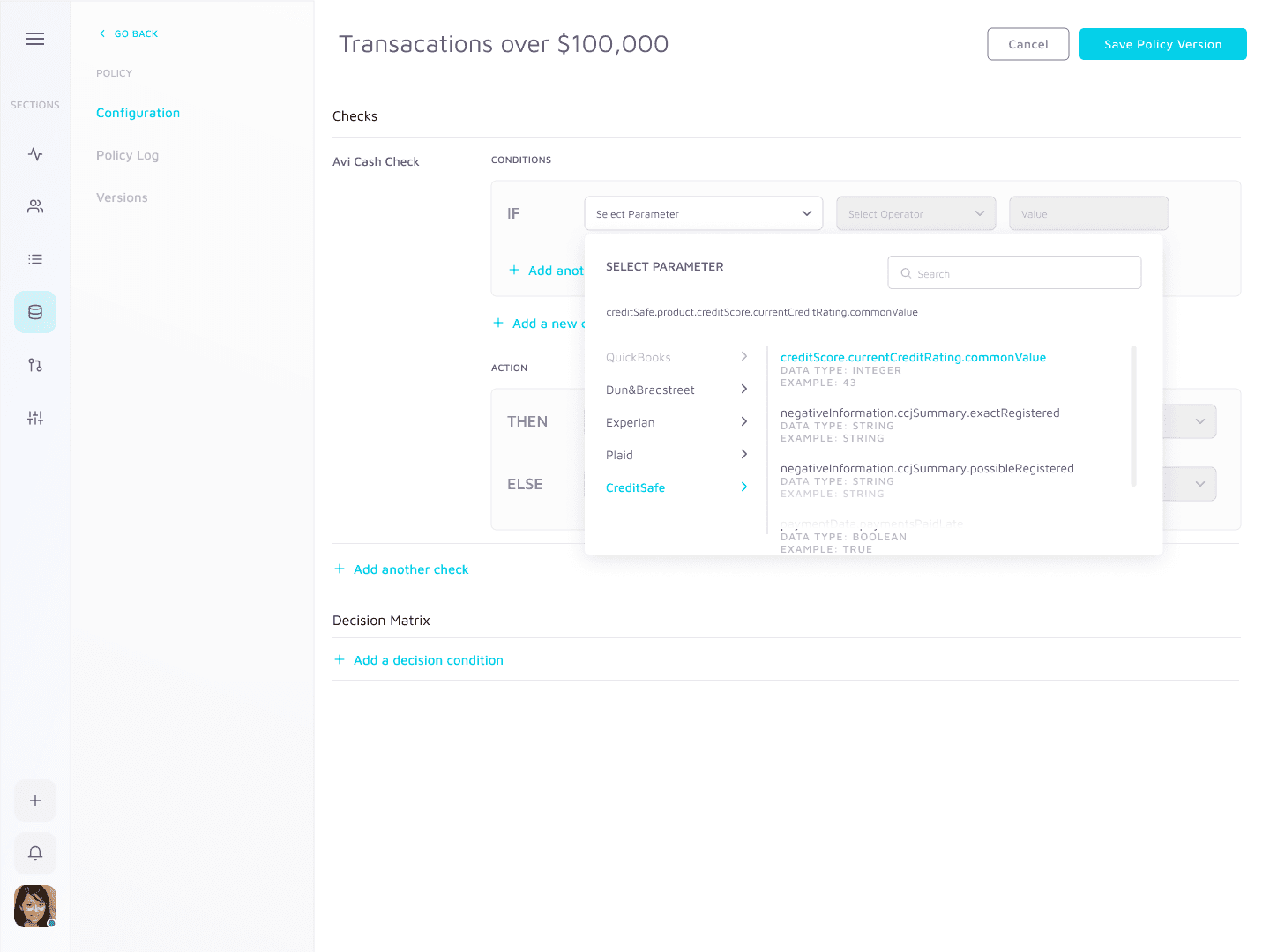
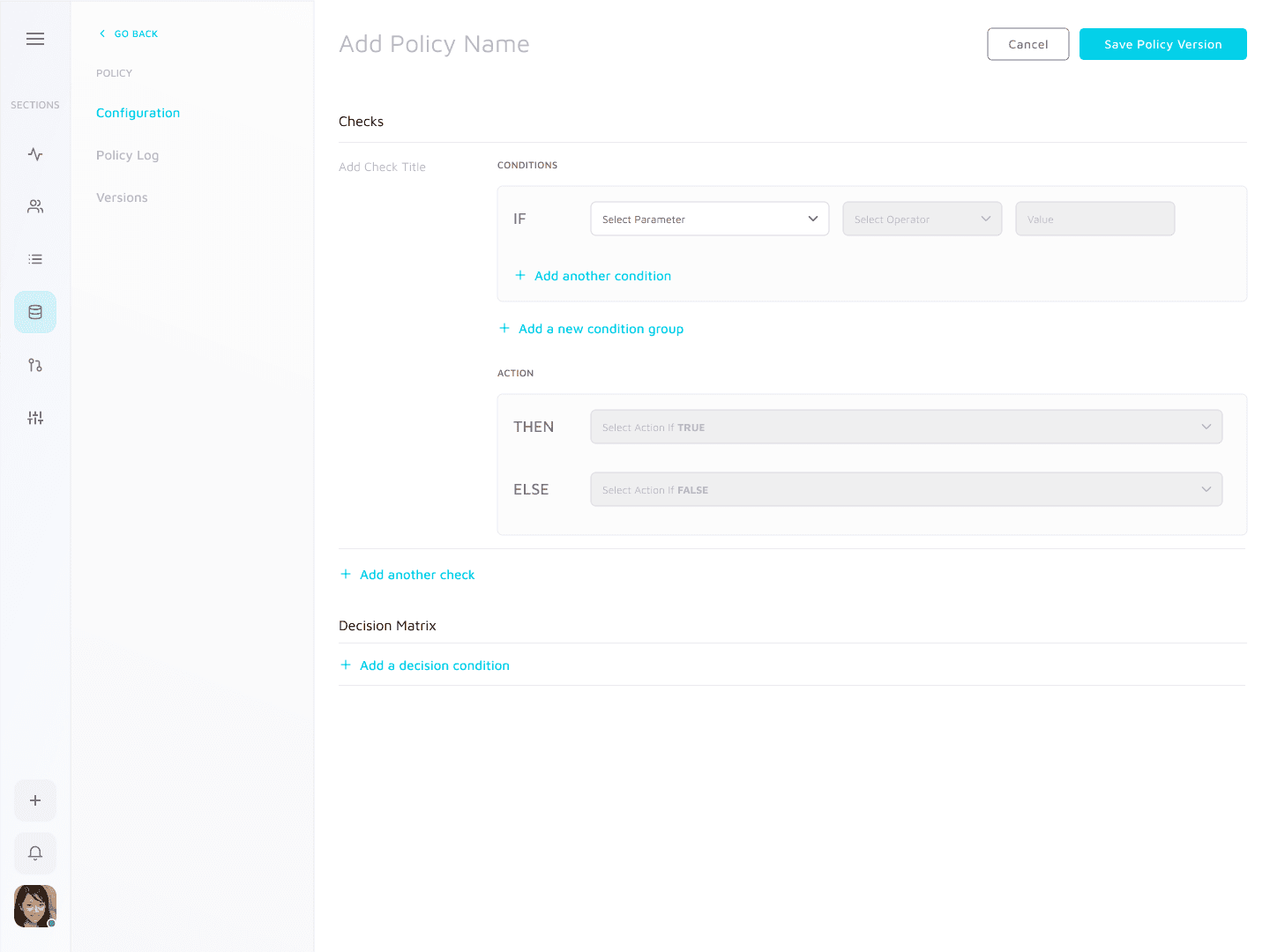
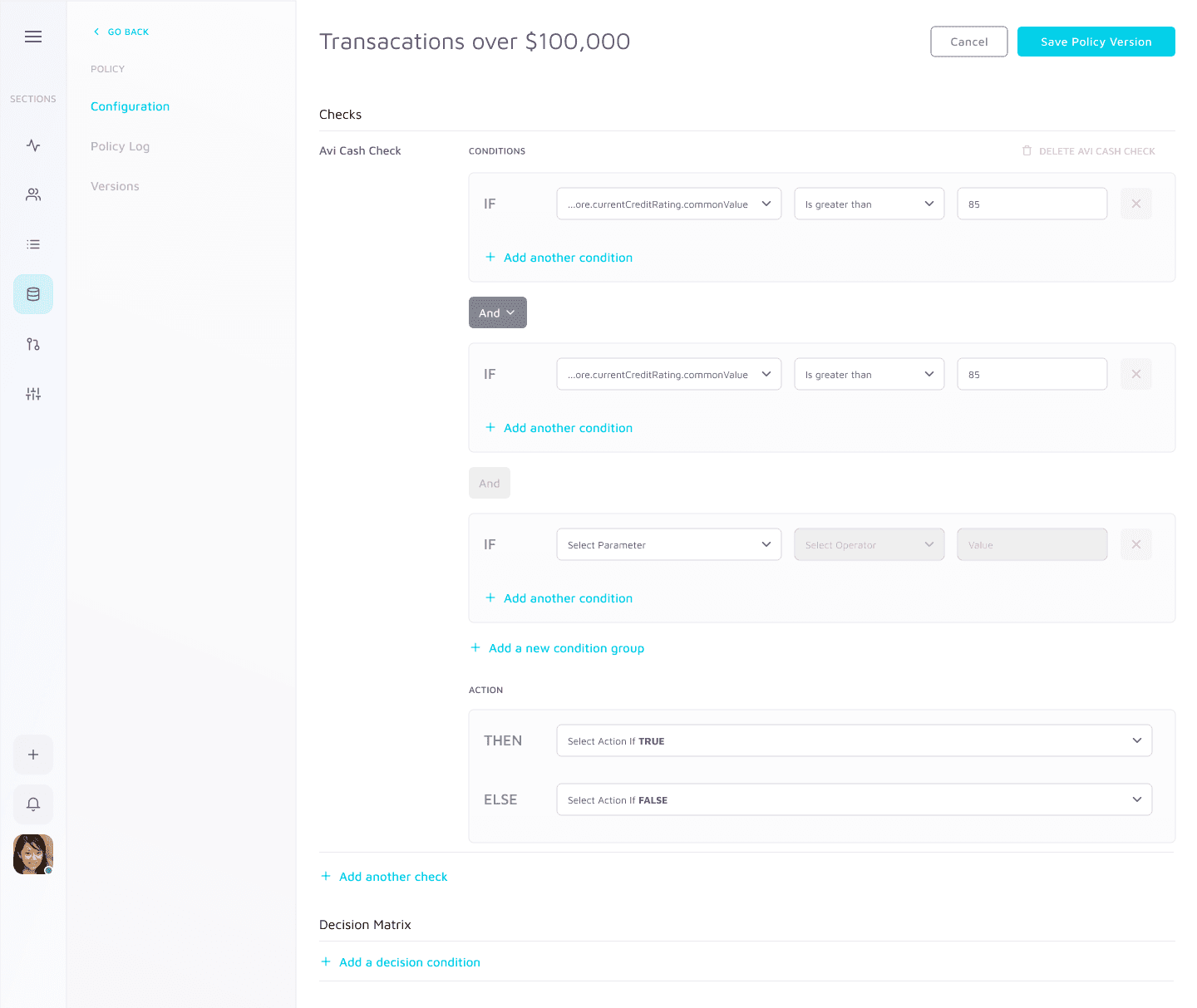
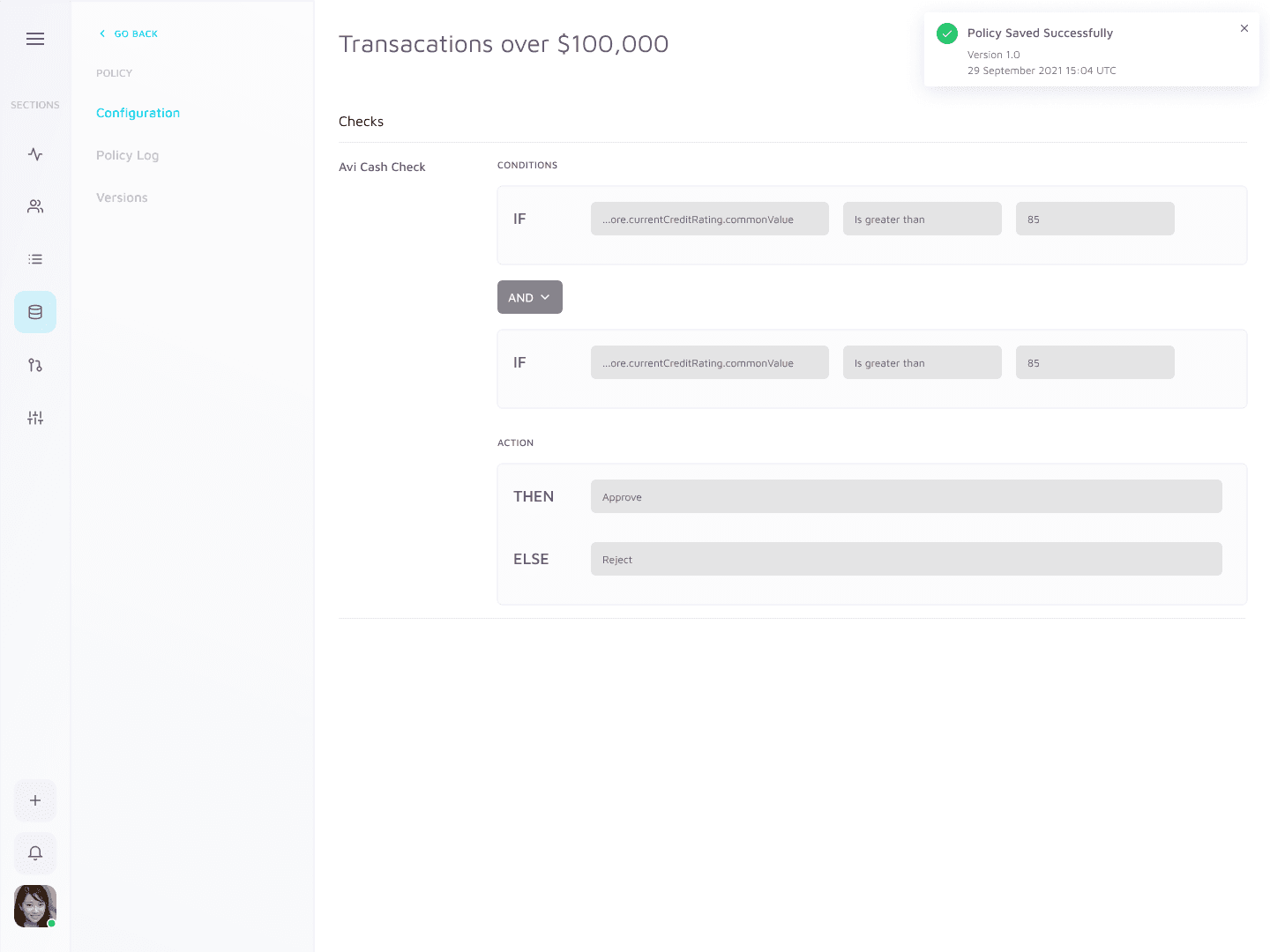
Outcome & Summary
Evaluate, Troubleshoot, Action
Strong internal feedback and a positive user response validated the redesign, showing clear gains in usability and clarity.
The redesigned experience let users move past simply viewing outcomes, toward actually understanding and acting on them. Making decision logic transparent cut down on manual interpretation and guesswork, so underwriting got faster and more confident.
What users can now do:
Trace every decision back to its originating data
Identify exactly where a policy failed
Resolve certain issues immediately
Rerun policies with confidence
Challenges & Tradeoffs
High system complexity required deep collaboration with engineering
Early concepts (e.g., progress bars) proved unscalable and space-inefficient
Tight timelines led to premature reliance on UI components over foundational explorationtimelines led to premature reliance on UI components over foundational exploration